

It takes 2 tests to get the full picture about chronic kidney disease (CKD)
Your patients with type 2 diabetes or hypertension may have CKD without even knowing it, and eGFR testing only tells half the story.

CKD by the numbers
CKD is a debilitating condition that often goes undiagnosed until late stages.


Despite living with preexisting conditions, CKD wasn’t on Thelma’s radar until she was diagnosed. Administering both the eGFR and UACR tests are critical to disease detection and can help paint the full picture of kidney disease. Utilize both the UACR and eGFR tests to screen at-risk patients for CKD
Thelma:
I’m Thelma, and I live with kidney disease.
Dr. Vega:
I’m Dr. Vega, and I’m a primary care physician who treats patients at risk of kidney disease.
Thelma:
Unknowingly, I began to lose kidney function, and was devastated after my diagnosis. Now, 20 years later, I want to share my story.
Dr. Vega:
People with kidney disease might go years without being diagnosed, because there can be no symptoms in the early stages. I encourage adults with type 2 diabetes and high blood pressure to get screened for kidney disease since you’re at a higher risk.
Thelma:
Many people from underserved communities feel like they don’t have a voice about their health care. My story is proof that they do. You have to advocate for yourself and talk to your doctor. It takes two – you and your doctor – to help detect and manage kidney disease.
Dr. Vega:
If you’re at risk, partner with your doctor and ask about complete screening, including the urine test, UACR, for kidney disease to get the full picture of your kidney health.
Thelma:
Knowledge is power, and advocating for yourself is one step closer to achieving that.

“ Even though I'd been treated for type 2 diabetes for 10 years, I was already at late-stage kidney disease when I was diagnosed. I wish I knew about the connection between hypertension, type 2 diabetes and kidney disease sooner, and encourage others at-risk for this disease, like I was, to get tested. ”
Patrick
When combined with eGFR, UACR allows healthcare professionals to stage and stratify the risk of CKD progression* and may also indicate the risk for cardiovascular disease.
Leading organizations suggest using two tests
Using both urine albumin-to-creatinine ratio (UACR) and estimated glomerular filtration rate (eGFR) tests can help to completely screen for CKD* in at-risk patients and may also uncover the risk of cardiovascular disease.
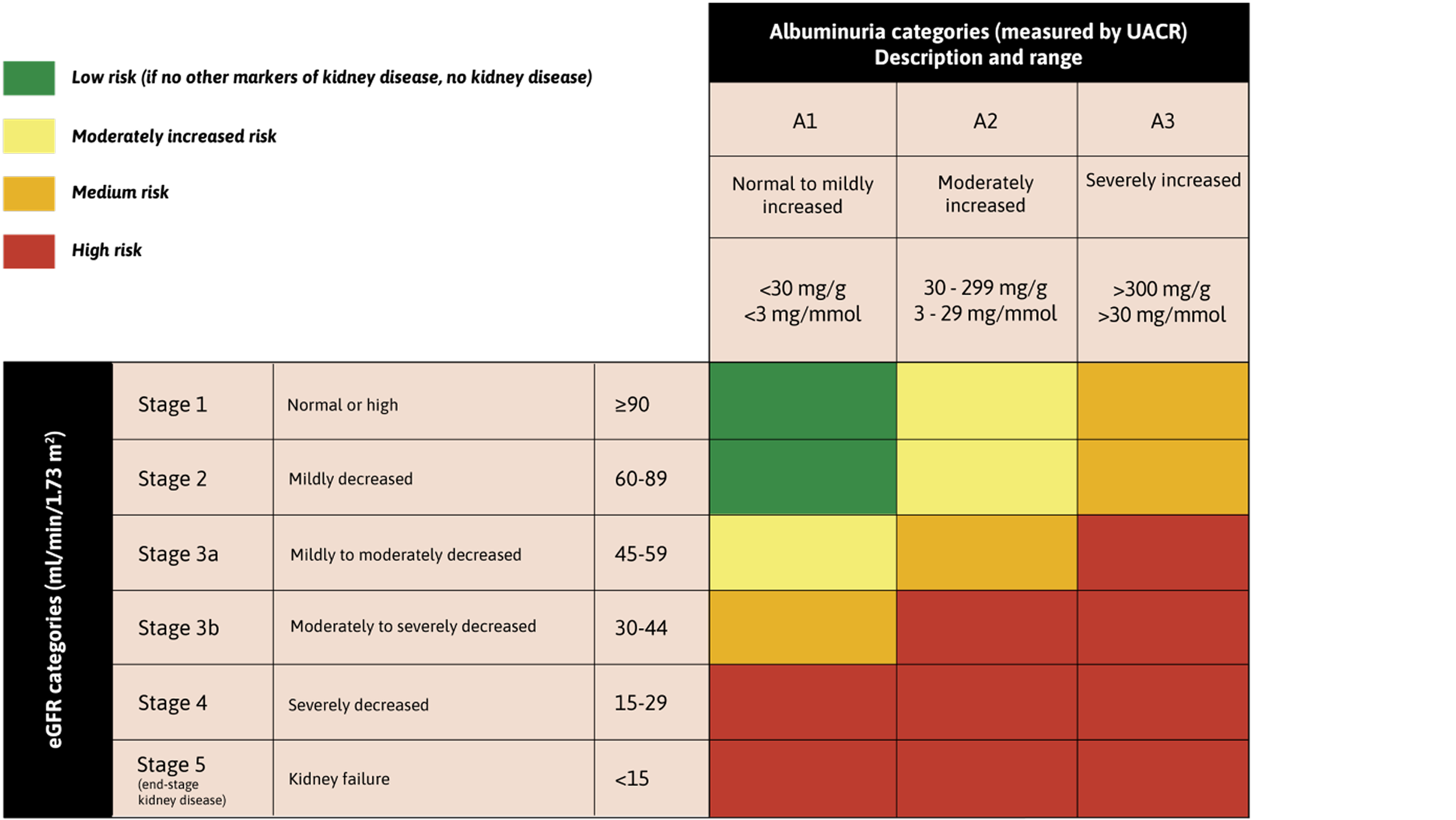
* This heat map can be used to determine risk of CKD progression but not risk of cardiovascular disease.
Take this quick quiz to test your knowledge of chronic kidney disease and get refreshed on key facts about risk, screening and early detection.

Commit to Two Tests for CKD Comprométase a dos pruebas de la enfermedad renal crónica
Chronic kidney disease (CKD) is underdiagnosed, but with the right tools, we can change that. Aunque la enfermedad renal crónica (CKD, sus siglas en inglés) se detecta insuficientemente, con las herramientas adecuadas podemos cambiar eso.
Comprehensive testing for CKD, using both the UACR and eGFR tests, can help identify kidney damage and can also reveal increased cardiovascular risk. As a healthcare professional, your commitment to using these tests can help lead to better outcomes for your patients. Las pruebas exhaustivas para detectar la ERC, incluidas las pruebas de la razón de albúmina/creatinina en orina (UACR, sus siglas en inglés) y de los receptores del factor de crecimiento epidérmico (eGFR, sus siglas en inglés), ayudan a identificar el daño en los riñones (renal) y también pueden revelar mayor riesgo cardiovascular. Como profesional de atención médica, su compromiso de usar estas pruebas puede ayudar a derivar en mejores resultados para sus pacientes.
Ready to commit? ¿Listo para comprometerte?
Join other HCPs who have committed to using both the eGFR and UACR tests to detect CKD and help improve care for at-risk adults. Únase a otros profesionales de atención médica que se han comprometido a indicar tanto la prueba de TFGe como la de CACu para detectar la ERC ayudar a mejorar la atención para adultos en riesgo.
0

pledges & counting promesas y contando
Early testing Can mean early treatment
Detecting CKD early and starting treatment can help delay disease progression

As valued members of the healthcare community, these HCPs understand the interconnected nature of type 2 diabetes, hypertension and CKD and recognize the critical need for comprehensive testing to help delay CKD progression.
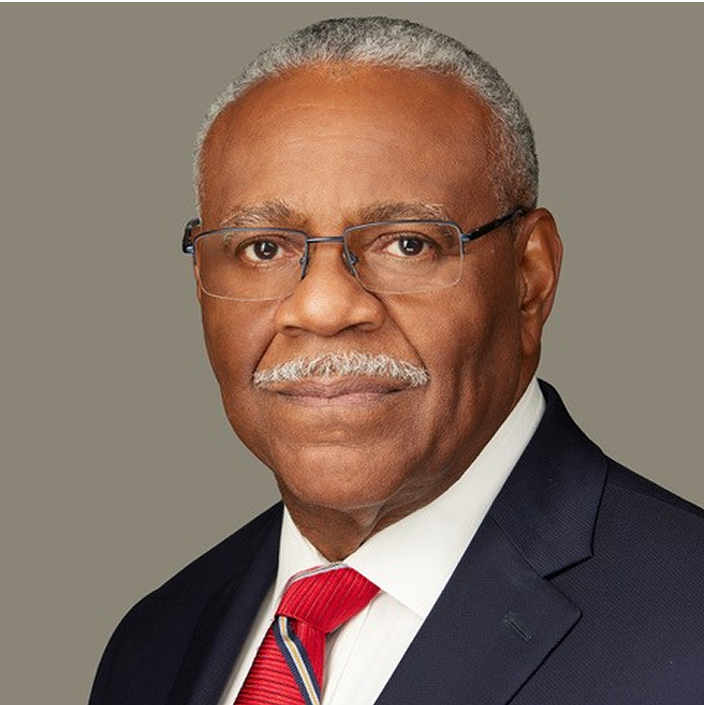
Dr. Eugene Wright, M.D.
With more than 40 years of clinical experience as a private practitioner, academic clinician and educator, medical administrator, and volunteer physician, Dr. Eugene Wright, M.D., is a wealth of knowledge and experience for his patients. He currently works as Medical Director for Performance Improvement at the South Piedmont Health Education Center and served on several advisory and editorial boards, including Clinical Diabetes, Diabetes Technology and Therapeutics. He has published several articles on diabetes diagnoses, treatment, and management and presented new treatments and diabetes technology around the world.

Dr. Charles Vega, M.D.
Charles Vega, M.D., is a family medicine specialist and Director of UC Irvine’s Program in Medical Education for the Latino Community. Throughout his 27-year residency at UCI’s Family Health Center, the largest safety-net clinic in Orange County, he’s used his extensive knowledge and experience to shape the next generation of medical students and residents. Dr. Vega has won numerous awards in recognition of his work in the development of training programs that provide quality, compassionate care to underserved populations.

National Kidney Foundation

American Kidney Fund
